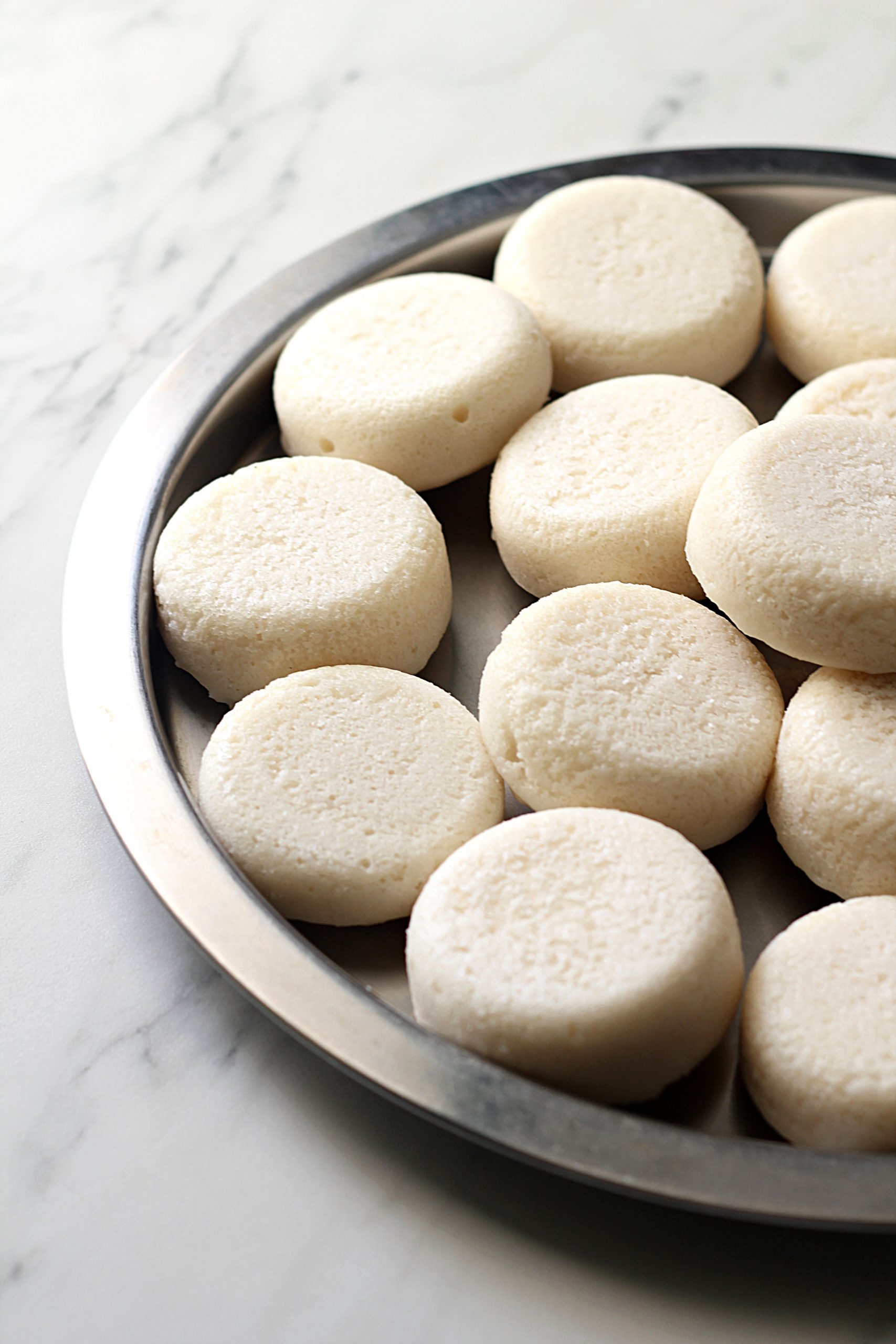
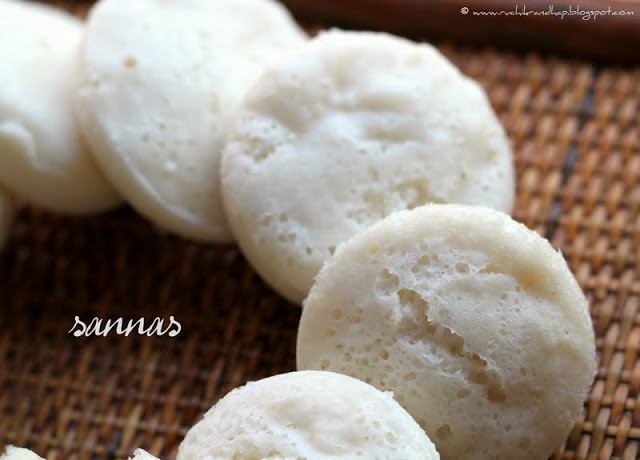

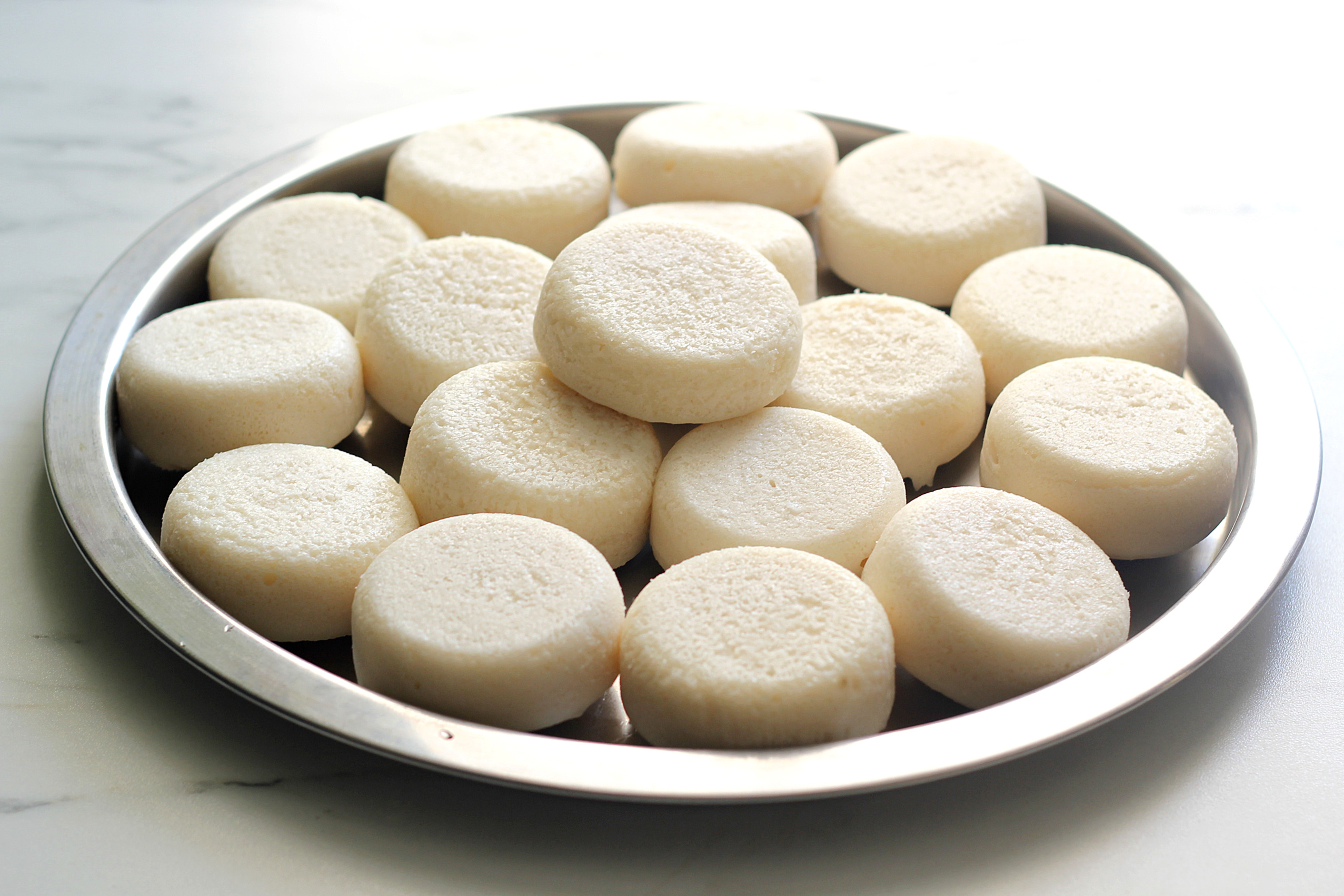
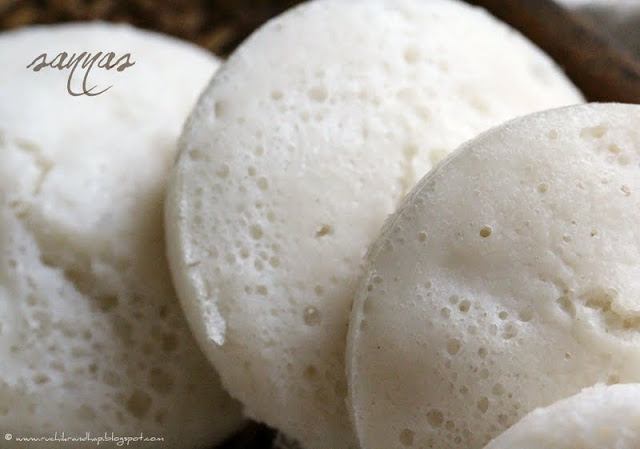
I think, most Mangaloreans I know would have eaten Sanna with Dukramaas (Pork Bafat) on Christmas day – year after year. This is like the Christmas Day staple diet. When I was in Mangalore, many churches/schools, especially St. Agnes Special school used to host the ‘Christmas Tree’ celebrations or ‘Fancy Fetes’ on Christmas day or the day after (usually during the Christmas week). It was impossible not to bump into a hundred relatives, friends and those you met last year on the same date during the same fete 🙂 And it was impossible to avoid the standard question “Christmas gammath gi? Kalein special?” (Did you have a jolly good time for Christmas? What was special for lunch?) and yeah – the most standard answer would be “Sanna ani Dukramaas”. Although there would be other special items on the menu in every house, it went without saying that ‘Sanna & Pork’ were the highlight of the day.
New here? Subscribe to my free newsletters with my latest recipes!
Tried my recipe? Do leave a comment on this post down below and don’t forget to give it a star rating! It will really help more readers discover my recipes! Do share a picture on Instagram and tag me @ruchikrandhap and I will feature your post in my stories!
Don’t forget to check out my latest videos on my YouTube channel. If you like what you see, do give me a thumbs-up (like), share & comment and subscribe to my channel so that the gods of YouTube (a.k.a algorithms) recommend my channel to a wider audience with similar tastes and more & more people can discover my videos!
And while you’re here, do follow me on Instagram, Pinterest, Facebook and Twitter. If you’d like to say hello or have detailed queries do send an email at ruchikrandhap@gmail.com. I’d love to hear from you!
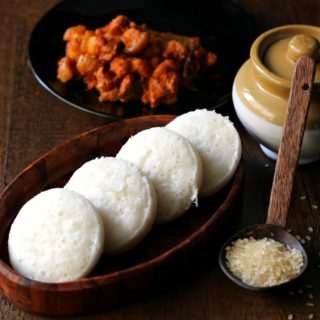
Sanna ~ Mangalorean Catholic Style Steamed Rice Cakes
Ingredients
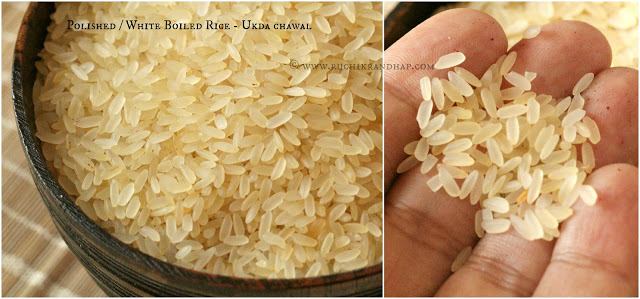
- 1-1/2 cups Boiled rice also called as Parboiled rice/Ukda Chawal/Idli Rice/Ukdo/Katsambar
- 1/2 cup Raw rice smalled grained rice such as Kolam in Hindi/Surai in Konkani/Belthige Akki in Kannada - I use Satyam brand Kolam rice which is really nice
- 1 fistful Urad dal Split Black Gram Dal (about 1/4 cup)
- 1 heaped tsp yeast
- 1 tsp sugar to prepare the yeast solution
- 3-4 tbsp tepid water to prepare the yeast solution
- salt to taste about 1 level tsp for the above mentioned quantity
- sugar to taste around 2-3 tsps
Instructions
- Wash and soak the two types of rice and Urad dal separately (in separate vessels) for at least 3 hours in plenty of water
- First grind the Urad dal to a fine paste and remove it - this helps in making the Sannas fluffy. Next, grind both types of rice together to a fine thick batter (not as coarse as Idli batter). Try to use as little water as possible to grind. It should be of dosa batter consistency but not too thick. Transfer to a wide, deep pan large enough to accomodate batter that will double during fermentation.
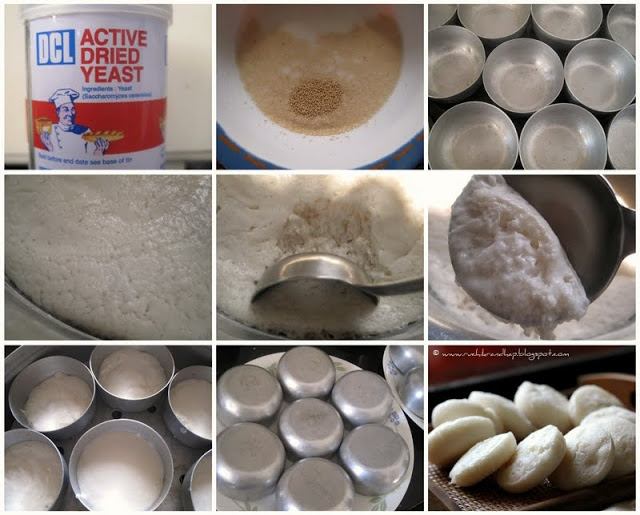
- Prepare the yeast solution by mixing the yeast and sugar in a bowl of tepid water. The sugar helps the yeast to dissolve faster. Allow to stand for 10 minutes, the yeast will ferment and turn frothy. Stir to ensure that all the yeast granules have dissolved and what you have is a thick solution.
- Mix the yeast solution into the batter until completely incorporated. Add sugar to taste (batter can be mildly sweet like appams - but it's upto you how sweet you want them). Add salt to taste (around 1 level tsp) Mix well and cover with a thin muslin cloth and place it undisturbed in a warm place to ferment for about 2 hours (during really hot weather, the batter will ferment in just about 1-1/2 hours)
- The batter would have doubled - for fluffy Sanna do not stir the batter or it will go flat. Place sufficient water in the steamer (tondor) and bring the water to a boil. Keep ramekins greased and ready. Pour batter into them half full. Place these ramekins into the steamer, cover the lid and steam for 15-20 minutes. Remove the lid carefully so as to prevent the vapour from falling on the Sanna (making the surface slightly soggy) and the steam from burning your hands/face. Carefully remove the ramekins and place them face down on a large plate. Allow to cool (to speed up this process if you need the ramekins for the second batch, place cold wet towels over them to speeden up the cooling process).
- Once cool, remove carefully and serve ! enjoy!
Disclaimer
The nutritional values are only indicative.
Lovely idlis…looks so spongy and soft…pearly white and I am sure it would be great with any spicy accompaniment.
yes its good to ea with Chicken curry, sukka and Chick peas curry.
superb soft n moist idlis..never heard abt this version..thanx for sharing!
Looks so soft and spongy
Shir I made them too twice.. Was so happy it came out nice. Love sannas.
Will try this version too and let u know.
Looooved the third snap 🙂
Quite a new idlis for me, adding yeast sounds interesting,cant wait to try this soon..love that cute moulds..
They look really nice n fluffy like little pillows! A great new version n a must try!
US Masala
They looks really soft and wow,treat for eyes too !I am sure I will enjoy making this!
the idlis look so soft and delicious..new to me..glad to follow u..do visit my space when time permits 🙂
Looks yummy! I will try it today 🙂
Thanks Priya 🙂 lemme know how they turn out!
It came out really good!! Thanks for the recipe Shireen. 🙂
Wonderful Priya!! Glad u liked it 🙂
Sanna looks delicious.Can we substitute yeast with baking powder.
Hi Lavina, thanks! Actually there is no real substitute for yeast. Toddy is a known substitute for yeast as both contain the micro organisms that are required to rise the dough. However, using baking soda with a combination of lime juice may help, but I cannot guarantee you that the results will be exactly like that of yeast. Baking soda is used where ingredients are naturally acidic, so in order to give the near perfect result as yeast you may add equal parts of baking soda (not baking powder) and lemon juice to equal the amount of yeast called for in the recipe. I have never tried it, so i cannot give you a 100% assurance that it will work. Do try the recipe with yeast itself – it is available with any grocer. Just ask for active dry yeast – in the gulf you can use DCL brand or in India you can ask for Bakers or Bluebird brands
Thanks Shireen for your wonderful explanation of using baking soda instead of yeast. Somehow i could get Fleischmann's Yeast Active Dry Yeast From Walmart(I live in USA).I will give a try . The Combination of dukramaas with sanna is so tempting.
Thanks for the Sanna recipes. one of my favourites.
Referring to the above comment – fleischmann's yeast is pretty strong as compared to our indian brand, so i guess you should use it lesser than required
Tried turn out a fop
Sorry to hear that. This recipe has helped many people make perfect sannas. Perhaps I can help you rectify whatever went wrong. Please share your experience with me and I will help you
Hi !
Tried making this recipie today and ran into some trouble. After making the batter and allowing it to rise well for around 4 hours, I started to steam the sannas. For some reason the batter will not steam and solidify but tends to boil over. I first thought my steamer had too much water and reduced it but this was not the case. The batter ended up like a goey mixture in the cups. Please help… really inspired by your other recipes and was hoping to eat some delicious sannas!
Hi Monica,
Could you please email me the pictures to ruchikrandhap@gmail.com? This will help me understand what the mixture looks like. If the batter rose too much it could spill over, secondly, if the rice used is not the right type also you will face the same problem. Please do send me the pictures so that I can help you. Thanks
Can I do it without the "1 fistful Urad dal (Split Black Gram Dal? Because I'm not sure what that is. 😉
Also, what is the purose of using the "1 fistful Urad dal (Split Black Gram Dal)?"
Thank You.
I'm Christy
I have another questions. Can I use regular asian jasmine rice on this recipe? I from USA and where I live, not sure where I can find the "boiled rice' [Idli Rice].
christy
Hey Christy,
Are you in the bay area? If so, you can find boiled rice at New India Bazaar on El Camino Real, Santa Clara. Stores that sell products from Kerala usually carry it too.
Hi Christy, ideally you need to use all the ingredients mentioned, but you may skip the Urad Dal which can be found in Indian stores by the name of White Black Gram Dal. But I know people who have lentil allergies who skip them while making Sannas. Urad dal is used to aid fermentation of the batter and ofcourse for the flavour & texture.
However you will need to use a combination of boiled rice (which looks almost like arborio rice) and raw rice (you may use Basmati rice). In India, sometimes instead of the combination of these two types of rice (boiled rice + raw rice) we use a single type of rice called Parboiled rice which I am not sure will be available in Indian/Asian speciality stores, do give it a try though. Good luck!
Thanks for replying back. Maybe I'll give it a try when I find the ingredients. Again thank you!
Christy
Shireen, I know this i a very old post! One slight suggestion, knowing that my idlis initially did not turn out fluffy! Its the urad dhal, if left too long in your cupboard. You need fresh urad to get it to turn out perfectly, whether it is sanas or idlis! I tried many of your dishes, and it come out perfect!
Thank you so much for the suggestion! I will update my post with it. Thanks for the feedback on my other recipes as well
Hi Christy, I am sure you will find all the ingredients at any well stocked Indian store in your locality. I will update this post with the pictures of the different kinds of rice just to help you get an idea 🙂
Hi Shireen, made your sanna's yesterday! with red rice and sambhar turned out really well, I had used not used yeast in Idlis, this was new to me :), thanks for sharing…
Great to hear that Jayasri!! Glad u liked the Sannas 🙂
Hi Shireen,
Just made sannas,and they turned out awesome!Thanks for sharing the recipe.
@Unknown: Thanks so much for the feedback!! Great to hear that they turned out well 🙂
Hi, i am new to your blog. I tried out your sannas recipe last week and it came out perfect, just the way it looks in your pics :)!! I have always been wanting to make sannas all my life but to no success. I just stumbled upon your website and thought let me try, since your instructions to prepare were very clear cut and looked easy. I am so happy that I finally got the right recipe for making soft and tasty sannas! Thank you!!
@Karen: Thanks so much!! It feels so good to know that the Sannas turned out fine! Do let me know if you've tried some more recipes and how you liked them!
hi shireen,
i followed ur recipe exactly and it came out perfect. thank u so much
jasmin
@Jasmin: Thanks so much for your feedback!! Feels great to know that you tried and liked them 🙂
Hi Shireen – Honestly, I am so blogged about your blog 🙂 It truly is a piece of virtual salivating heaven, I must say! 🙂
Anyways, I was wondering if these Idlies can be made in an Idly cooker? cause that's what I have. I live in Seattle, so it's really hard for me to get these utensils. Probably I should get one when I come to India. BTW, I am a Banglorean 🙂
@Unknown: Thank you soo much!! I am humbled by your compliments! Well, if you don't have regular sanna ramekins u can try the idly cooker, but the result won't be the same, so do try and get them on your next trip to India!
I live in Brazil and here Urad/moong dhal or for the matter-of-fact any other type of dhal is not available. Thank you for this recipe…I am surely going to try it any my kids are going to love it.
Thanks a lot Veena! Good luck with the Sannas, hope u like them 🙂
Thanks for the tips about the vessel, Shireen! Btw, I am Poornima.
Thanks for your comment Poornima! Hope you like the Sanna!
I tried this recipe without the urad dal, it came out really good. It was great having a reply from you SHireen, made me so much more connected to India.
Thanks so much for your feedback Veena! So good to know that the Sanna came out good even without the urad dal! It feels great to be connected to you too – the internet is truly a terrific invention!
Hi Shireen I am going to try sannas tomorrow. Just wanted to know if the grinding is possible in a mixie. I dont have a wet grinder. What is the consistency I should look for?
Ashwini
Hi Ashwini, yes, grinding is possible in a mixie, I do the same too. Use the jar that has a blade meant for grinding rice (the one that looks like a fan), it will be the bigger jar of your mixie. You need to grind the batter fine like dosa batter, however retain the water from the mixie (when you have removed the batter & added water to wash it) and add it to the batter…it should be wee bit thinner than dosa batter but not runny.
Hi shireen
have a doubt if want to make these sannas early in d morning then can i let the batter to ferment for whole night. First time trying my hand on this. Please help. Also would the soaking time vary. Thanks.
Lavina sequeira
Hi Lavina,
If the weather is not too warm (like Mlore) you may leave it to ferment overnight, as I know a lot of people who do that. Also, the quality/brand of yeast used will determine how fast your batter will ferment. Since I use DCL brand of yeast it ferments in no time and I've had a case of batter going sour when I left it overnight – which is why if I intend to make the sannas for breakfast I usually steam them the previous evening, refrigerate and then lightly steam (not microwave!) them again in the morning – they turn out super soft and fluffy!
Thanks for the reply dear. I am in mumbai i have bright star brand yeast. I think i will make it in the evening and steam it next day. Hope it turns out well. Also does the rice and lentils need to be soaked only for 3 hours or can be soaked longer too.
Shireen i love all ur recipes. I dont know if u remember me but i have commented earlier too on raw plantain curry (star moon). I recomended ur site to my sis who is in dubai and she was very happy. She just loved the way u pen down even minute things. She made kori curry and was happy with the result. Dev bhoren karu tuka.
Thanks so much for all the lovely things you said Lavina. Thanks also for recommending my site to your sister. Glad to know that she liked the kori curry 🙂
Well, if you soak the rice+urad dal for more than 2-3 hours they say the batter turns out sour fast. I have personally not gone beyond 3 hours, so haven't experienced this. But if you leave it to ferment for too long it will definitely go sour
Hi! Thank you for sharing your sanna recipe. You have mentioned that for a heigher yield take a ratio of 3:1 (cups of boiled rice : raw rice)- I would be grateful if you could let me know if the quantity of yeast also should be increased. Thank you.
@ Anonymous:Yes, you can increase the yeast to little less than double.ie 1-3/4th tsp will do (again it depends on the power of your yeast – so use good quality yeast) All the best!
Hi shireen..found you blog while searching for sweet pulv. Your blog is just amazing. Being a mangie myself im so delighted t see all the recips u have mentioned. They all took me back home as I live in the uae.
Just a question, as I want t try the sannas this weekend, can a mix of idli rice and basmati rice be used for the given ratio of boiled and raw rice?
Preema
Hi Preema, thanks so much for your kind appreciation of my blog! By idli rice do u mean the rice known as 'mutambo' in konkani – if yes, it will suffice, there is no need to add basmati. However, if by idli rice u mean boiled rice, then u can use basmati (which is also raw rice by itself)
Thanks Shireen for the reply. It was just in time. will go by the first option 🙂
Preema
Hi – Im from Chennai and am a manglorian ..I have tried sanna before but the recipe it compltely different as I add coconut to the rice and do not add ural dhall..but am going to try your version today…The only problem is I use theidly cooker..wil ramkens be availab;e in all shops? is there another name for it/
Hi Cynthia: Since I am not from Chennai I googled and found that a lot of baking equipment and other crockery is available at reasonable prices in Poppat Jamaal's, Mount Road/Anna Salai Road, Bang Opp Spencers. My friend from Chennai says u can check in Adyar Murugan Store and ask for idli kinna or katoris. I hope this helps.
Hey Shireen. Thanks for your work on this blog. I just made the sorpatel per your recipe (blood and all) and it is delicious. One quick question here if you will indulge me. You mention ukdo tandul and raw surai. I am assuming that the ukdo tandul should also be raw ie uncooked. Is that true or should it be cooked? Thanks again for your recipes. Reminds me of the good times I had back home growing up.
Hey Shireen, thanks for your work on this blog. I have a question of you will indulge me. The ukdo tandul is also raw ie uncooked, right?
Best
Gopal
Hi Gopal, thanks for your compliment. Yes Ukdo tandul is pre boiled – right after harvesting – boiled in large drums of water and then dried in the sun – this process causes the rice grains to fluff up a bit. The confusion between raw rice, boiled rice & cooked rice lies in the terms. Raw rice is a variety of rice – where the rice is harvested, husked & sold in the market. Boiled rice is like I mentioned pre boiled, dried & sold. Cooked rice is a method of preparing the raw or boiled rice 😀 I hope this clarifies. I have added a picture of the Ukdo tandul for your reference! Cheers!
Hi Gopal, thanks for your compliment. Yes Ukdo tandul is pre boiled – right after harvesting – boiled in large drums of water and then dried in the sun – this process causes the rice grains to fluff up a bit. The confusion between raw rice, boiled rice & cooked rice lies in the terms. Raw rice is a variety of rice – where the rice is harvested, husked & sold in the market. Boiled rice is like I mentioned pre boiled, dried & sold. Cooked rice is a method of preparing the raw or boiled rice 😀 I hope this clarifies. I have added a picture of the Ukdo tandul for your reference! Cheers!
Thanks for your reply Shireen.I will use raw ukdo tandul and raw surai as per your directions. I am from kadri in mangalore, where are you from? I miss Mangalore so very much. I loved growing up there. A truly cosmopolitan society in a non city setting. Unique to India for sure. Best, Gopal
@ Gopal, I am from Urwa and I miss Mangalore too! Hence the food – it helps me stay connected to my roots.
hey, Im from Urva too, small world…. been using some of your recipes for quite some time now, lazy to comment though, but you being a fellow urvaite & all, I had to write something. All of them have turned out great, used toddy instead of yeast for sannas, & todays batch(second one) tasted just like the ones you get at Brothers(Kadri/Nanthoor highway)
Thanks a lot for blogging.
Hi naveen , can u plz share ur proportions of toddy for the above recipe . Would really appreciate it.Thanks in advance.
Hi Navin! Thanks a ton 🙂 good to know u r from Urva too!! Happy Easter & I am glad you liked the sanna!
Hi Shireen, came to this recipe from srivalli's ICC Challenge of this month.. you have given a good description of the Recipe and the origin.. very well explained. I hope I could get them as good as yours…
Thanks a ton Nupur! I hope you try & enjoy the Sanna 🙂 Do revert if you have any doubts 🙂
I got them perfect Shereen /… Thanks again for making me aware of this wonderful dish 🙂
Sounds super Nupur! Glad to know that you enjoyed them 🙂
Hi Shireen, I have soaked the rice and daal, but when you say do not stir the batter, I am confused. Are you trying to say that after grinding and adding yeast, stir, but once fermented, do not stir! So wouldn't the batter be thick at the top? Also should the batter consistency be like the usual idli batter?
Hi Vaishali,
I have mentioned under Step # 5:
The batter would have doubled – for fluffy Sannas do not stir the batter or it will go flat.
So yes, after you grind the rice you need to adjust the consistency there itself. Then add the yeast and mix it well into the batter. Stirring at this stage is a must so that yeast mixes well & does its job. But after that you keep the pan undisturbed till it doubles in quantity – this should take 1-1/2 (one and a half) hours if good quality yeast is used and the weather is nice & warm. Once the batter doubles, do not stir – because the dough will fall flat and your sanna will not turn out fluffy as they should You need to use a ladle and scoop out portion by portion and put it in the ramekins/katoris
And yes, the batter should be thick like idli batter but not too runny
Hope this answers your doubts. Pls feel free to revert if you have more doubts!
Rgds
Shireen
Thanks for such wonderful information as how to prepare Sannas. Is it possible to avoid Sugar ? Does this taste like IDLI ?
Are Sannas & Idli are same ? Can sugar be avoided ? Is it a substitute to Idli ?
Hi Pradipdas51: Sanna is a softer and fluffier version of the idli. Idli has a dominant flavour of urad dal and is tougher & more grainy in its texture. Yes sugar may be avoided for health reasons if you wish, but a little sugar brings out the flavours. It can definitely be used as a substitute to idlis – they are versatile and can be eaten with curries or chutneys or even with honey, sugar and ghee or chocolate sauce
Hi Ruchik,
I have been searching for sanna recipe for a long time and I tried your recipe on the weekend and it was exactly how you showed it in your photos
it was yummy and soft
Hi Caroline,
Thanks for the appreciation & so glad to know that you enjoyed the Sanna! By the way my name's Shireen and not Ruchik!
Hi Shireen,
What does ruchik randhap mean if thats not your name.
My question was what if i tried adding yeast to my regular idli dosa batter, other than the quick fermentation, does the taste change?
Hi Rush,
If you see the tag line on my banner, 'Ruchik Randhap' is a term in Konkani that means 'Delicious Cooking'.
I have never tried adding yeast to regular idli dosa batter. To my knowledge, the urad dal in idlis help the fermentation but by nature idlis are not very 'fluffy' like sanna. From many people I gather that they find sanna to have the 'yeast' smell – you can try it if you like. Let me know how it goes
This is hilarious because my name is Sanna LOL.
But nice recipe I shall try this new form of idlis 🙂
Hi shireen, every recipe that I have tried from ruchik randhap has always turned very good . THANKYOU so much for this website. It has helped me a lot .
I feel sad to say I failed in only one and I am sure I made a mistake but donno where, so, I need ur help. I ground the rice for sanna and urad like u said. Added yeast. The batter rose but I think I did not wait till it doubled. The sanna where flat and mushy. Does the batter have to double? I used parboiled rice and instead of surai(which I did not have), I used basmati. Can u help me on this. Does it have to be steamed only 15-20minutes, since it did not rise, I steamed longer but to no help.
I need help with this, so sorry.
I love all the other recipes I have tried so I am worried about this one. Thanks
And have a wonderful NEW YEAR!!
Vvn
@ Sanna Madan: That's funny! You have such a cute name though 🙂 Hope you tried these sannas!
@Ven: Thanks so much for the great feedback and confidence you have placed in my blog. I am sad to note that the Sanna didnt work for you. A few questions:
1. Did you grind the rice and urad dal separately? This is important as the urad when ground separately fluffs up nicely.
2. You need to let the dough double and then carefully remove the dough and fill your ramekins with it. Each ramekin can be filled upto 2/3rds full. Once filled, don't move them around too much or bang them against the surface or the air bubbles will escape and the dough that has risen will fall flat
3. Parboiled rice is partially boiled rice also known as idli rice. It is used in recipes which call for a combination of boiled rice+raw rice. However in my recipe I have asked for a combination of two types instead of parboiled. I am not sure if its the right substitute you have used. Since I have never used it for Sanna I cannot tell you for sure that the rice is to be blamed.
4. Steaming is done for 18-20 mins but if the problem lies in the batter not doubling up then little can be done to save the sanna later.
Sorry for the delay in responding, If you have more queries please feel free to comment here or email me at ruchikrandhap@gmail.com. Thanks!
Have a lovely year ahead!
Shireen, Thanks for the reply, I am going to try them out again, This time I will let the dough double and I will change the rice. Will let you know how it turns out. Today I just finished preparing "egg roce curry" . Turned out Yummm…. This recipe really takes little time and is delicious. Thanks again.
Ven
got a 10 on 10 for sanna and kori gassi from my mother in law. all credit to you. thanks a lot. tried them for the first time in my life. very happy.
@ Ven: Thanks once again for the feedback on the egg roce curry 🙂 glad u liked it!
@pushpa: So happy to hear that! Hope you are able to try out many more recipes from the blog and impress your mom in law! 🙂
Hello Shireen,
Thanks a ton for this recipe….I am a telugu-ite but I spent two whole years in Mangalore – and fell hopelessly in love with the cuisine! I remember the steaming hot Sanas served with chicken curry for functions…amazing!! And the fish curries from restaurants, the chicken sukka, and trips to Ideal ice cream- where u get the yummiest ice-cream ever!!
Sanas taste nothing like Idlis and should not even be compared to Idlis, they are a million times better!!
@ Me: Thanks so much for youyr wonderful comment, so happy to know that you love Mangalorean cuisine as much as you love the other things about Mangalore. It is one of the best places to be! Yes, Sannas are a class apart! Fluffy goodness that is great to mop up any curry and satisfy your soul 🙂 Happy to hear from you!
Dear Shireen, I stumbled upon your blog and must say your recipe for sannas sounds really good. Will try it out soon. I'm a malayalee btw and love idlis and sannas equally. In your blog and replies to viewers, idlis are underrated as less soft and spongy. Not true. I have always made super soft, fluffy and spongy idlis. The trick is knowing what rice to use and how to make them I guess. Will let you know how my sannas turn out. I plan to use Goa rice that's available here in Mumbai where I live. Also known as idli rice. Super for appams too.
Hi Renuka,
Thanks for your lovely compliment! Well, I have always eaten idlis at restaurants and those have always been less soft and spongy than sannas, so my views are solely governed by my experience. I am sure there are various ways of making them and they will turn out great when the right type of rice is used, please do share your recipe and I will definitely give it a try. My email id is ruchikrandhap@gmail.com. Thanks and hope you enjoy the Sanna!
Dear Shireen,
Thank you for your prompt reply. Here's my surefire recipe for idlis.
Three measures of boiled rice
Two measures of Goa rice/idli rice/ponni rice
One measure good quality udad dal
One measure poha or white beaten rice
One and a half teaspoonful methi seeds
Mix boiled rice and idli rice, wash well and soak overnight. Add the methi seeds.
Wash and soak the udad an hour before you begin the grinding process. Wash and add the beaten rice to the deal just five mins before grinding as it gets mushy quickly.
I use an Ultra Tabletop wet grinder with a bowl of one and a half litre capacity.
Grind the udad adding a little water off and on. In twenty to twenty five mins the dal should be ground well. It will appear light and fluffy. Remove it to a big vessel which will allow it enough space to rise.
Next, grind the rice taking care to add enough water so the grinder stone moves smoothly but do not make it a very loose batter. It should be fairly thick or the idlis will sink when cooked.
Grind the rice till the consistency is like fine semolina. I find the idlis turn out fine even if the rice is ground smooth. This way I use it both for idlis and dosas or utthappams.
When done, add salt to taste and mix the dal and rice batter with your hand preferably so it ferments better. Be careful while mixing the batter. Don't adopt a heavy handed approach or whisk it too vigorously. Fold in the batter lightly as you would with a cake mix. You need to incorporate air into the mix. Now close the vessel and set aside to ferment overnight. I generally give it fifteen hours to ferment naturally if the weather is cool. In summer end hours should do. Do try it out and I hope you get the kind of idlis I do. 🙂
Hi Renuka, Thanks a ton for your lovely recipe, I will definitely give it a try! By measure do you mean cup? Pls let me know, thanks!
Hi Shireen….
If I replace the yeast with Toddy…What should the quantity be?
Roona
There have been references made to par-boiled rice. Uncle Ben's is par-boiled rice. Also in the U.K. or U.S.A. use the yellow pages or do a google search for Indian stores or Chinese store or Vietnamese stores between them you should be able to get whatever rare to you ingredients you need. Do not feel bashful about asking the store cashier or whoever is working there for help in finding the ingredients you may need.
@ Roona: I have never tried this recipe with toddy so I am not sure!
@ Byculla Wala: Thanks for the suggestion, I will update my post with your tip
Hi Shireen
Great to see such passion in your explanation. Looking forward to try these sannas. Just one question..If I had to convert the "cup" as a measure into weight in grams, what would the measures be. Also is the "cup" a standard cup that's available in the stores
Hi Shireen,
I'm quite excited to try out your sanna recipe..some how haven't perfected it as yet.
Can you pls let me know how many grams would one cup be? Is this "cup" available as a standard measure.
Also, I have the TN idle rice that's available..so should I put 1&1/2 cup of TN idle rice & 1/2 cup of raw rice?
Warm regards,
Priya
@ Priya: I am not sure if you are the same person who emailed me as I have replied to your query there. 1 cup (250 ml cup) would be approx 200 grams of rice. Idli rice is different from boiled rice. For this recipe we use a boiled rice-idli rice combination
Hey! I just wanted you to know that I featured your recipe on my blog!
Cooking
Dear Shireen,
I have always made sannas, but with your recipe they turned really awesome!! thanks for all the small tips.. including not stirring the batter – I always did that and it resulted in them not being that fluffy..
Suppose I do not want to make the sannas immediately can I keep the batter in the fridge and make them the next day morning ? Nothing like freshly made sannas!!!
Hi Shireen,
As I wrote earlier, you have a fantastic blog! One question about the sanna recipe, if you do not stir the batter after fermentation, wont the denser rice flour settle at the bottom and the top will be mostly urad, so that although the initial batch of sannas turn out soft and fluffy, the latter batches turn out a little hard? I have a similar recipe for making 'poles' or thick yeast fermented dosas and this is my experience, so I usually stir the batter gently, so that most of the foamy texture remains and later I had a couple of teaspoons of sugar so that the yeast can feed on the sugar and produce more carbon dioxide gas which gives the foam. I do the same for appams and I have always gotten really soft poles and appams. I have not tried sannas so I will give this recipe a try.
@ Marina: Thanks so much for writing in. Well, I have never stirred the batter and it has always given me best results. Yes, the last 2-3 sannas get unfluffy batter as by the time you finish scooping out the rest of the batter a little 'flat' batter remains at the botton. I always felt that the act of stirring the batter after it has beautifully risen defeats the whole purpose of getting it to rise in the first place.
But yes, if you ferment the batter (which takes about 1-1/2 hrs in good weather) and refrigerate it, the next day you need to mix it well and then bring the batter back to room temperature before steaming sannas, otherwise the batter stays fluffy on top and liquidy at the bottom. I hope this helps and you are able to make fluffy sannas 🙂
Hi Shireen,
I visit your blog very often. Tried a few of them as well. This time am looking for Sanna recipe. For the yeast, Can I also use Instant yeast (which I believe is different from active dry yeast). Will I have to follow the same procedure of dissolving in water & sugar. What about the quantity, will it be same? Thanks, and keep posting more recipes.
@ Unknown: Yes you can replace active dried yeast with instant yeast. Just use 1 level teaspoon or 3/4th teaspoon will also do! Good luck and do let me know how it turns out
Hi Shireen,
Where do you get Belthige Akki from and what brand do you buy? I live here in the states too and I've been looking everywhere to find it- but I've been unsuccessful.
THanks!
Neha
@ Neha: We get raw rice in Lulu here in Dubai. Look for any raw rice variety like Kolam rice in any Indian store! Worst case you can use cheaper quality of Basmati rice (like broken basmati)
Can you please tell me how to make soft sannas with mutamo rice.
@ Lydia: I have not yet tried making sannas with mutambo rice. I will surely give it a try and let you know!
hey
Would you be so kind to let me know what the dimension of the molds are
I have cupcake molds but I feel they are slightly smaller
Many thanks
@ Edward Lobo: The molds I have for sanna should be around 180ml. You could look for steel katoris, the bigger ones.
Hi shireen ,
I must firstly congradulate u on the fantastic job You are doing with your blog. The first memory I have of sanna is that of my grandmother making them during christmas. The aroma would fill the atmosphere…and it was a beautiful sight seeing my grandmother steam more than 100s of them and cool them on a prestine white linen..spread on a straw mat.i have made your sanna recipe several times with success. Iv asked my mum for the proportion with the addition of toddy..she isnt sure as her mother use to mix such huge quantities.Recently my mum visited her sisters in mangalore and got back some amazingly velvetty sannas prepared by some home cateres. There were spongy,springy almost like a cake yet firm and delicious since there were made using toddy. Iv been experimenting with some homemade toddy using coconut water…but unfortunately I hvnt been able to crack the proportion so it seems to ferment really quickly say within 45 mins..and although bangalore isnt as warm as mangalore…i think thats too quick to rise. Can you plz share what proportions did they use back home when they prepared sanna using toddy? Thank you well in advance
Hi Bhavna,
Thank you for sharing your lovely memories with me! Yes, the aroma of sanna batter fermenting away brings back lots of memories for me too! Regarding your query, I have personally never used toddy to ferment the batter so I am not sure what proportions would be okay. I can check with someone back home and revert as soon as possible! Do stay tuned!
Thanks so much shireen ! Sounds good ! Hope to hear frim you soon .
Hi, how many Sanna does your recipe make?
Hi,
This recipe makes between 25-27 medium sized sanna!
Hi Shireen, Tried out your sannas n they turned out soft n spongy. I used red rice from Mangalore n they were tasty. I steamed them in cupcakes silicon mould n got some beautiful shapes. But the only problem was there were cracks on top of some sannas? What could be the reason. Can u explain pls so I can rectify the mistake. Thanks.
Hi Vilma,
So glad to know that the sanna turned out good! Well, regarding the cracks on top, either the batter was not of the right consistency – if it was was too thick or you used too much yeast it can lead to cracks. Too much yeast also causes discolouration, so were the sanna slightly yellowish? If not, we can assume that the batter may have been too thick. Next time you can add a little extra water (not too much) and try
Shireen, love all your recipes but the sannas were the best… I just wanted to check again if I can store the batter in the fridge and make sannas the next day after the batter comes back to room temperature? Does the yeast still work after a day?
Hi Ines,
Thanks so much for your feedback on the sanna! So glad you liked them 🙂 Well, yes, once the batter has fermented you can refrigerate it. Do remember that it will continue to ferment in the fridge and may spill over so it is better to place a large plate underneath to collect the overflow. The next day you need to bring the batter back to room temperature before steaming the sanna, so yes, a few hours on the counter should help. The yeast will still help the next day!
Thank you so much Shireen. Wanted to have the Sanna-Dukramaas tradition at Christmas. Attempted the sannas finally this Christmas after 4 years in the US. I had to experiment with different kinds of containers at home, since I didn’t have the traditional ones. The batter was perfect and the texture of the sannas was soft and fluffy. We enjoyed it with dukramaas and chicken curry. Thank you.
Hi RC,
Thank you so much for your feedback! I am so glad that you enjoyed the sanna recipe so much! I am really so happy and my mum would be too as it is her recipe! Compliments of the season and wishing you and your family a Happy New Year 2019
Hi Shireen, I tried the recipe but I guess I goofed up somewhere. I didn’t stir the batter before making the sannas as mentioned, but the batter looked frothy on top, lumpy in some portions and liquidy at the bottom… what could be the reason for this? The sannas didn’t turn out right…. please help!
Hi Janet,
Perhaps you let the batter ferment for longer than required because the dense part of the batter may have begun to settle down. You could in such cases, give the whole batter one stir just to give it an even consistency
Would it be possible to get the batter to ferment without using the yeast? I imagine it will take a few days to get to the fermented stage. What are your thoughts about this way, Shireen?
I know that people do make sanna without yeast. They use toddy or just sprite I heard. You can also try keeping the batter to ferment for anywhere between 6-16 hours depending on the weather and it should ferment just like the classic Indian idli batter does. I haven’t tried these methods but you could give it a try
Being a Magalorean, I know how the sannas look and taste like. I always wanted to make them. After failing a couple of times I found your recipe ❤️.
I followed exact steps, they turned out so soft and tasty. It reminded me of the sannas my mom makes usually.
P.S: Can’t wait to make pork bafat (another amazing recipe of yours) to go with it.
Thanks a lot for your lovely feedback!! I am so glad that the sannas came out good, thanks for letting me know 🙂
Hi Shireen
My sannas turn hard in the middle. Dunno why
Hi Carol,
Did you follow my exact recipe? Sannas turn hard due to any of the following reasons:
1. Not enough water added to the batter
2. Oversteaming
3. Adding the wrong proportions of rice and urad dal
4. Too much yeast
5. Not steaming the batter right after after it has fermented (ie, if you keep it too long)
Hi Shireen…
I made these fluffy soft Sannas and they came out awesome. I followed your recipe exactly and the result was super soft cotton like sannas. Thank you so much. Your recipes have never failed me.
Hi Sumana,
Thank you so much for your lovely feedback! I am so happy to hear that! Your appreciation motivates me so much, so thank you <3!
Hi Shireen,
I folllowed your recipe and the Sannas turned out amazing. We usually wait for our family members to prepare some and send it for us or relish them when we would go to their house for dinners. But this was amazing…following the instructions and yummy Sannas ready. My children enjoyed it the most.. so thank you so very muchhhhhhh. God Bless
Thank you so much for the wonderful feedback! So happy to hear that you are able to make and enjoy these sanna at home!
Tried it for the first time
Awesome fluffy sannas. It fermented very fast using instant yeast in warm weather so missed out on the exact fermented flavor I guess(not sure).
But they were otherwise great.
Thank you so much for the feedback! Happy to hear that!
I always used to buy this for my kids as I did not know how to make but then after coming across this post of yours I think now I can easily try this. Thank you so much for sharing this recipe.
I am so happy to hear that! Thanks for the feedback!
Hi Shireen,
Thank you for your awesome and detailed recipe. Yesterday I made sannas for the 2nd time yesterday following your recipe. My sannas came out perfect with the same aroma from my childhood.
I used homemade sur from another recipe. Also all your tips and video were very helpful. Like you said the batter doubles up in 2 hours. I kept it in a big vessel but still it was overflowing.
Thank you so much for the great feedback Jonita!! Happy to know that the sannas turned out good!
Thanks for the recipe! Mine didn’t turn out as fluffy as I had hoped. Couple of things that I did differently. 1) for the small-grained rice i used kerala matta rice 2) used a idli vessel instead of ramekins 3) steamed for 10 mins at which point they were cooked; 4) added only 1 tsp sugar and finally 5) mistakenly used about 75% of the recommended yeast amount. What would you recommend I do differently next time. Thanks in advance.
Hi Nivi,
If you don’t follow the exact recipe you won’t get the exact results 🙂 My replies are below:
1. The small grained rice is raw rice that is required for this recipe. Kerala matta rice is a boiled rice variety. By using that you have basically ended up using 2 types of boiled rice varieties.
2. Idli vessel is fine.
3. The recipe calls for steaming for 18-20 mins. Why did you reduce the steaming time for 10 mins?
4. 1 tsp sugar will be less but it depends on your personal preference
5. Please use the recommended amount
Thanks for your quick & comprehensive reply! I steamed for less time because I figured the idli vessel maybe more efficient in transporting steam than the ramekins. Sounds like your recommendation is to steam for 18-20 mins regardless.
I have made sannas with this recipe quite a few times and they turn out perfect every single time.
Thank you so much for the great feedback Loviena!
this is hands down the best sanna recipe bec its turns out just perfect soft like cotton … everyone wants me to make them now bec no one makes them like me
Thank you so much for the great feedback Joan!! So happy to hear that you liked the recipe so much 🙂
Will it work if I don’t have the traditional utensil, remember mom used to use the tondor… can I just pour into a flat dish and bake and then cut Shireen
Yes for sure! You can simply pour it into steel thalis or even into banana leaf shaped into plates…then cut and eat…
This came out so good! I will never follow any other recipe again !! Thanks so much !!
Thank you so much for the great feedback! Happy to hear that!
Thanks for this recipe! I always use this recipe to make sannas and it never goes wrong. Since I don’t get kollam rice, I substitute that with sona masoori rice and I substitute ukda rice with matta rice. I don’t know if they’re the same but it works. Thanks once again!
Thank you for the great feedback! Yes, basically the recipe calls for raw rice (in your case you have used sona masoori) and boiled rice (for which you have used matta rice) – perfect! It worked! Thanks for sharing your feedback Benita <3
how important is the kollam rice step? Thanks!
I didn’t understand your query Janice! Could you pls elaborate?
Hi Shireen,
Have been enjoying your recipes! Thank you so much. I tried the sannas but mine came out hard. ..not fluffy and spongy. Why do u think this happened?
Hi Lara,
Sorry to hear about your experience with this recipe…did you use fresh (new package) of yeast? Did you ferment it for longer than recommended? Did you stir the batter too much once it rose?
It’s my first time trying to make sanna from scratch and this was such a simple recipe to follow. They came out soft and pillowy and we enjoyed them with some dukramaas!
I am so glad to hear that! Thanks a lot for the feedback!!
Shireen, how does one keep the made sanas soft in the fridge?
Sorry for the late reply! You will have to steam the sannas for a couple of minutes before serving – I do this and it gives me soft sannas everytime
Love the detailed recipe and always enjoy your write ups on the dish and how it relates to you
Thank you so much for the kind words of appreciation Vanessa!
If using toddy how much to use.
I have never used toddy…
Can we put coconut while grinding rice
A little coconut should be ok, yes
Can we use toddy and what will be measure instead of yeast.
You can use toddy, however since I have never tried it I am unable to give you the correct quantity
Can we use toddy and what will be measure instead of yeast. I dont think I have the reply to this comment. Please reply again, if you can.
Just replied to your earlier comment 🙂 Sorry, since I haven’t tried this recipe with toddy I am unable to provide you with an accurate quantity of toddy
Hi,
Thanks for the recipe…..how long does the prepared Sanna stay fresh in the fridge?. I want to prepare for an event and make in advance.
Hi,
The sanna stays fresh for at least 3-4 days, you can lightly steam them before serving. I have also tried freezing them and they work just as well but they are delicate so make sure to place them inside a muslin cloth and into the steaming pan or they will stick to the container
Can you give me a receipe using toddy instead of yeast
I haven’t tried it with toddy yet, will surely share the recipe if and when I do
Thanks for sharing. Tried today. Perfect receipe
So happy to hear that! Thanks for the feedback Veena!
Fantastic result got perfect sannas! Thank you!!!! ! Have eaten sannas in Mangalore and Goa but never tried making them before now!
Thank you so much for the great review Indu! Happy to hear that they turned out so good
Tried and failed various recipes. But this recipe is spot on. I followed it carefully and got it right first time itself. Sannas turned out lovely and fluffy. Thanks Shireen
So happy to hear that Maria! Thanks a lot for your lovely feedback!
Hi Shireen
Can i make the sannas a day before and leave it in the tondoor or should I keep them in a plate and cover with plastic bag.
Thank you.
Ivy
Hi Ivy,
Sorry for the delay in responding to your query. Yes, you can make them the previous day and cool them completely before refrigerating. The next day you can steam them in the tondor for 1-2 mins before serving – they will be as good as fresh. Also if you have prepared them late at night, yes you can keep them covered and then serve them for breakfast or refrigerate them early morning
I have made this recipe nearly 5 to 6 times. All the time the sannas have turned out superb. Thank you for sharing it. It’s loved by my family as well
That’s wonderful! Thank you so much for the appreciation Dina!
I am trying it today . I have an yeast sachet from uae. How any teaspoons of yeast should i put for double the quantity stated in your recipe?
The same amount of yeast will do, no need to double it
I used alot less yeast as i was not prepared to ruin my sleep!! It came out well but not as good as my mums. I had a sachet of yeast from the uae. I am not sure how much yeast do i need to add if i ground the batter at 7am and need it ready for lunch in mumbai. . Your tips please. Thanks
If you made any changes to my recipe you won’t get the same results. To get sannas in time for lunch you need to grind the batter by 8am, ferment by 11 am and steaming would take another 30-45 mins..so your sannas will be ready by lunch.
Excellent recipe. It would be useful if you could always include the yield for every recipe.
Thank you! Sure, I will do that and update the recipe